About Comidoc
Eight years of tracking Udemy coupons, one solo developer, six rebuilds, zero affiliate links.
Published July 16, 2026 · Updated July 19, 2026
Comidoc tracks Udemy coupons and free courses, and, unlike most coupon sites, verifies every coupon against Udemy itself before showing it to you. When a page says a coupon was checked three hours ago, that is a real timestamp from a real verification, not a marketing claim. This page tells you who is behind that, where the project comes from, and how it pays its bills.
- Udemy courses catalogued
- 228,487
- Coupons tracked on this platform
- 124,306
- Verified coupons live right now
- 3,425
- Most recent verification
- 3m ago
It started with actually taking the courses
In July 2017, comidoc.com launched as a WordPress Udemy review site with an absurdly honest method: enroll in each course and review it with three pertinent screenshots. The first version is shown below: a rough Udemy review and course-discovery site before the tracker existed. Reviewing courses by hand doesn't scale, but it forced a habit that never left: look at the actual thing on Udemy before telling anyone about it.

In March 2018 came the first request to Udemy's API, and with it the realization that course data (price, enrollments, ratings) could be tracked at scale. Comidoc.net 0.1 shipped the same month, a scrappy stack of React, Express, MongoDB and Go. By December 2018, version 1.0 was live and the identity was set: an online courses tracker, not a review blog.

Six rebuilds in eight years
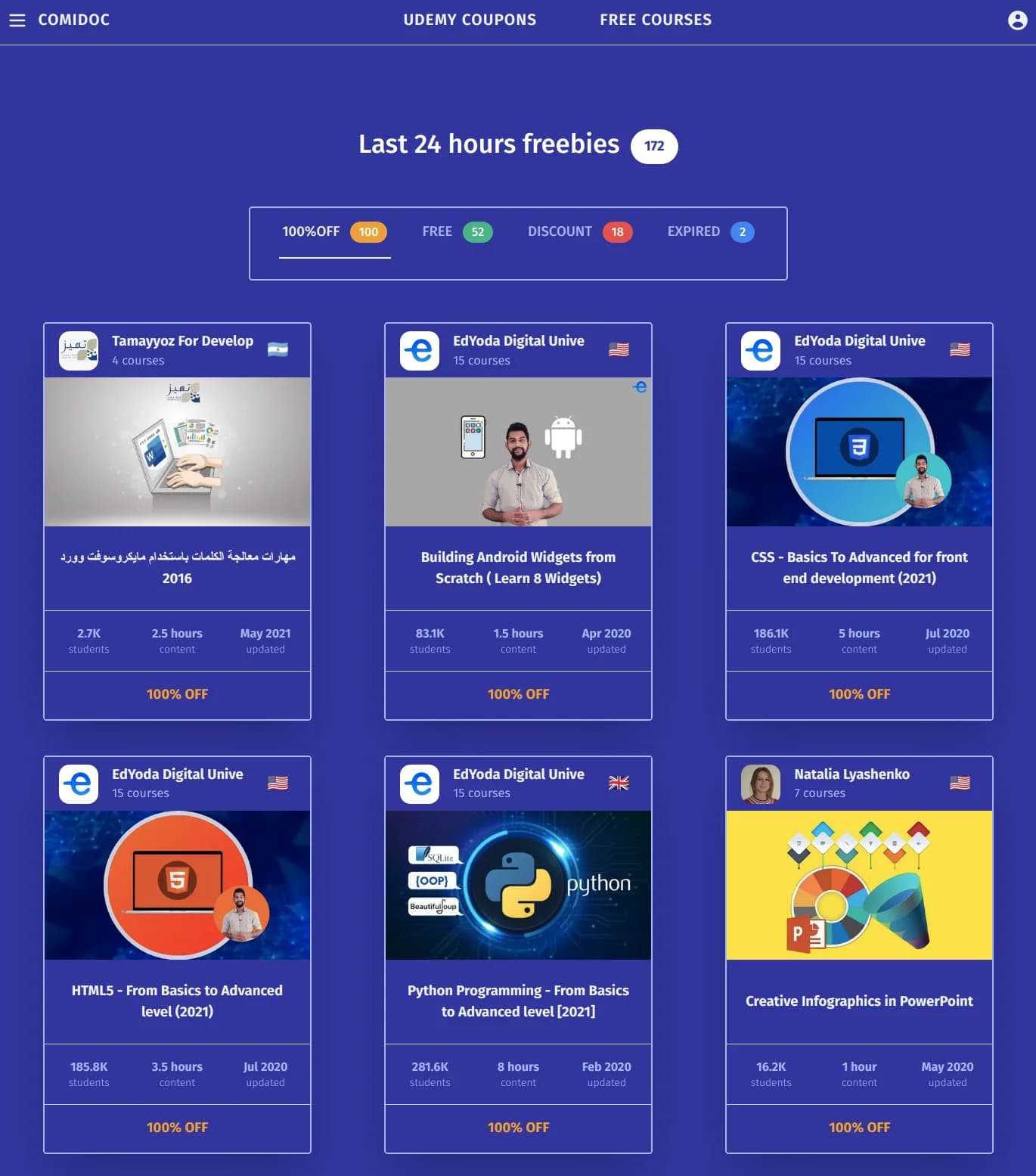
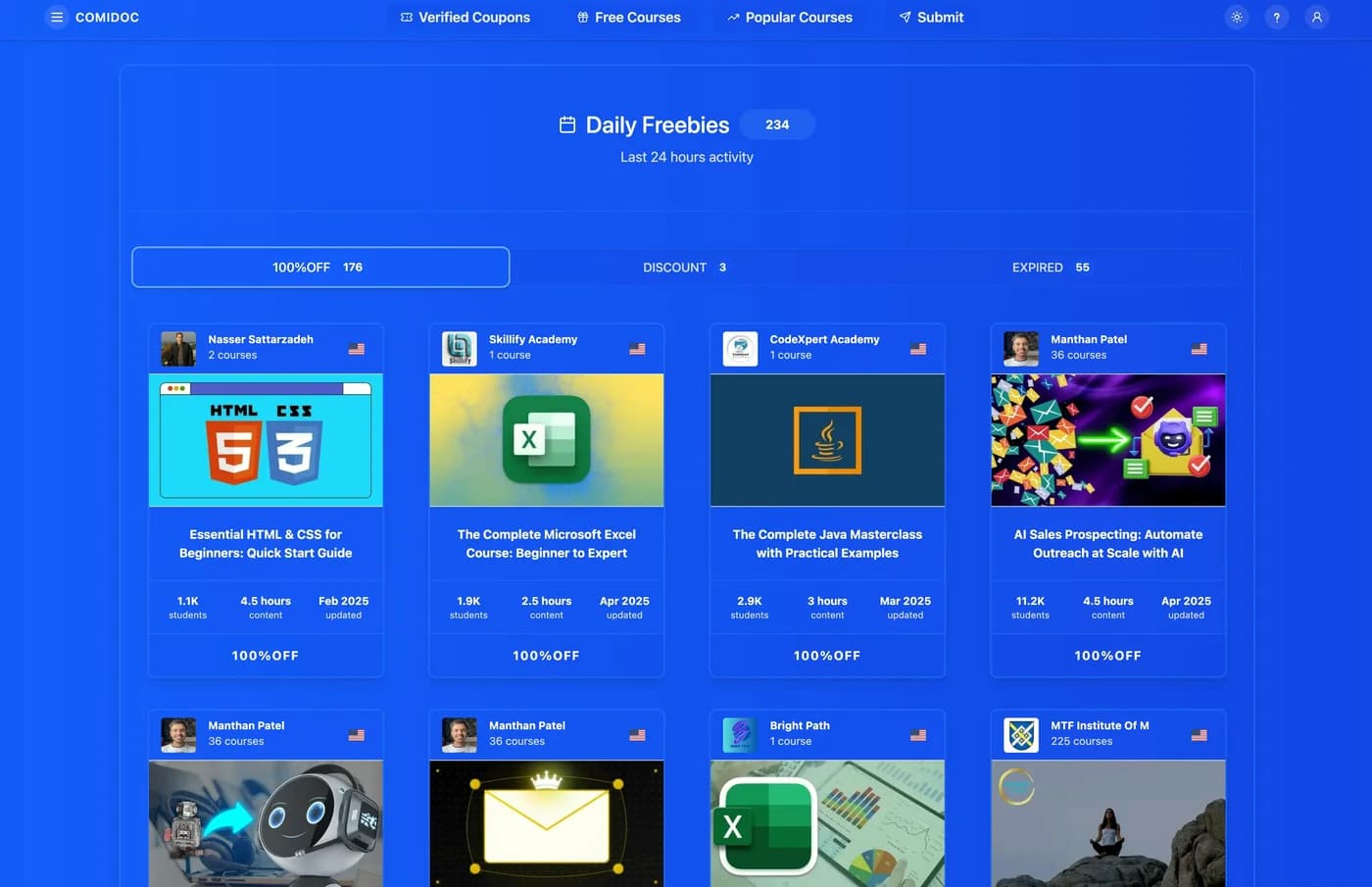
The project has been rebuilt roughly every two years, each time on the lessons of the previous version: 2.0 in August 2020, V3 in October 2021, V4 in April 2025, and the current platform, rewritten from the ground up in 2025 and 2026 as a single full-stack application. The screenshots below show how the product changed from one era to the next.
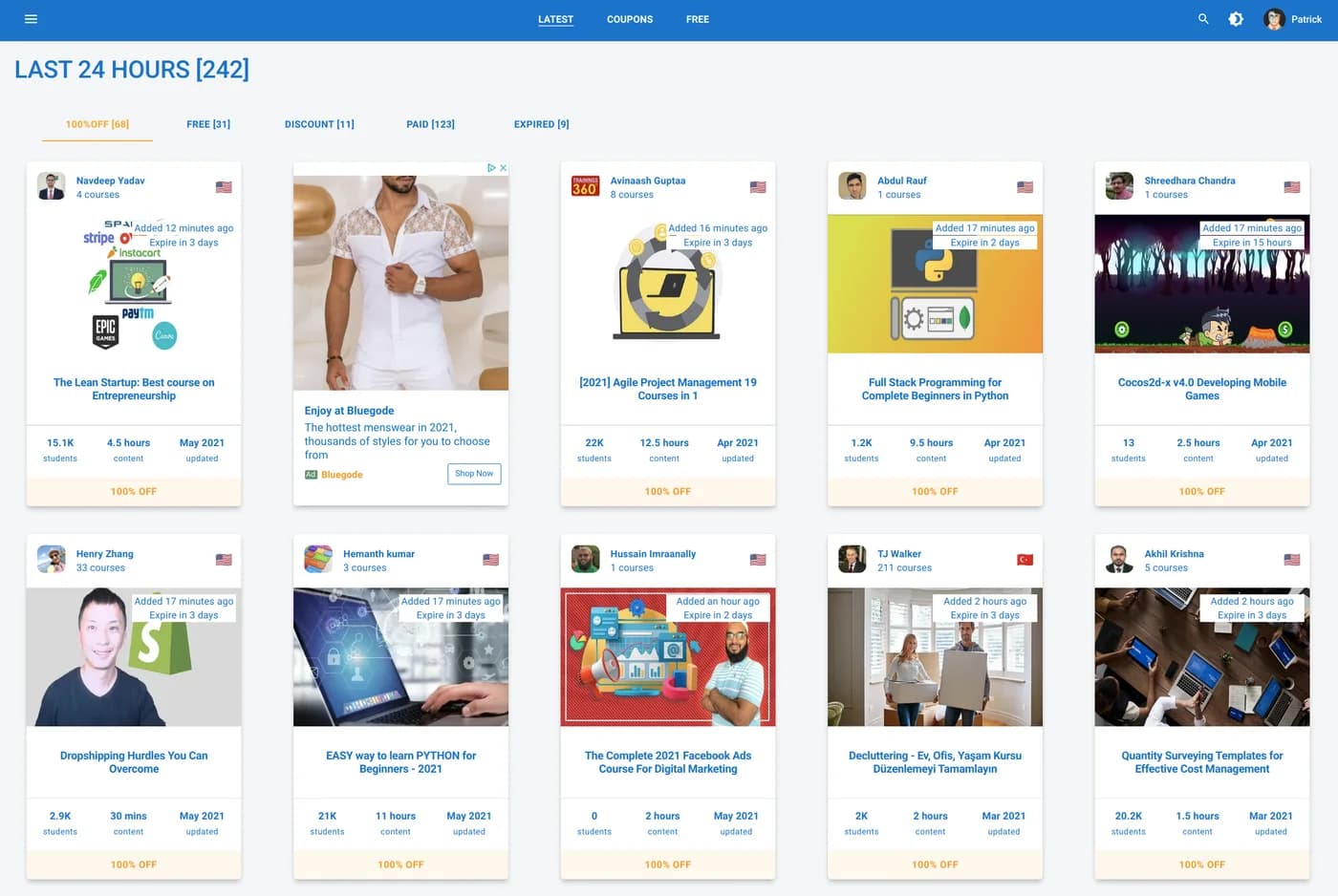
Look at the cards in that 2.0 capture: “Added 12 minutes ago”, “Expire in 3 days”. Freshness tracking was the product's spine five years before Udemy's 2026 redemption caps made it existential. The Chrome extension followed the same thread: first shipped in January 2019 as a few hundred lines of jQuery, rebuilt in 2021, and still maintained today with real-time coupon checks and a right-click watchlist.
How Comidoc is funded
Sharp eyes will spot an affiliate disclaimer in the 2018 screenshot: like almost every coupon site, early Comidoc earned commissions on enrollments. That era is over. Today Comidoc is funded by optional Premium subscriptions , clearly labeled advertising and the paid plans of the developer API, and earns no affiliate commission on the courses it lists: a coupon is shown because it exists and verifies, not because it pays. That is also why expired codes are labeled as expired instead of being dressed up as “still working”, and why our comparison with other coupon sites can afford to be checkable.
Who runs Comidoc
Comidoc is independent and has been built and operated since July 2017 by a solo developer in Paris: the same person who writes the verification pipeline, answers support messages, maintains the extensions, and publishes the data research this blog is known for. No growth team, no content farm: if something on Comidoc is wrong, say so and the person who built it will fix it.
Our verification promise
Every active coupon on Comidoc is re-checked continuously against Udemy's own course data: current price, remaining redemptions and expiry. Since Udemy capped free coupons at 100 redemptions (10 for a smaller tier) in early 2026, the median coupon survives only a few hours, which is exactly why we show verification ages instead of pretending codes live forever. The full pipeline is documented in how we verify Udemy coupons.